Meet the characters
Lizzie, Bo, & Mills
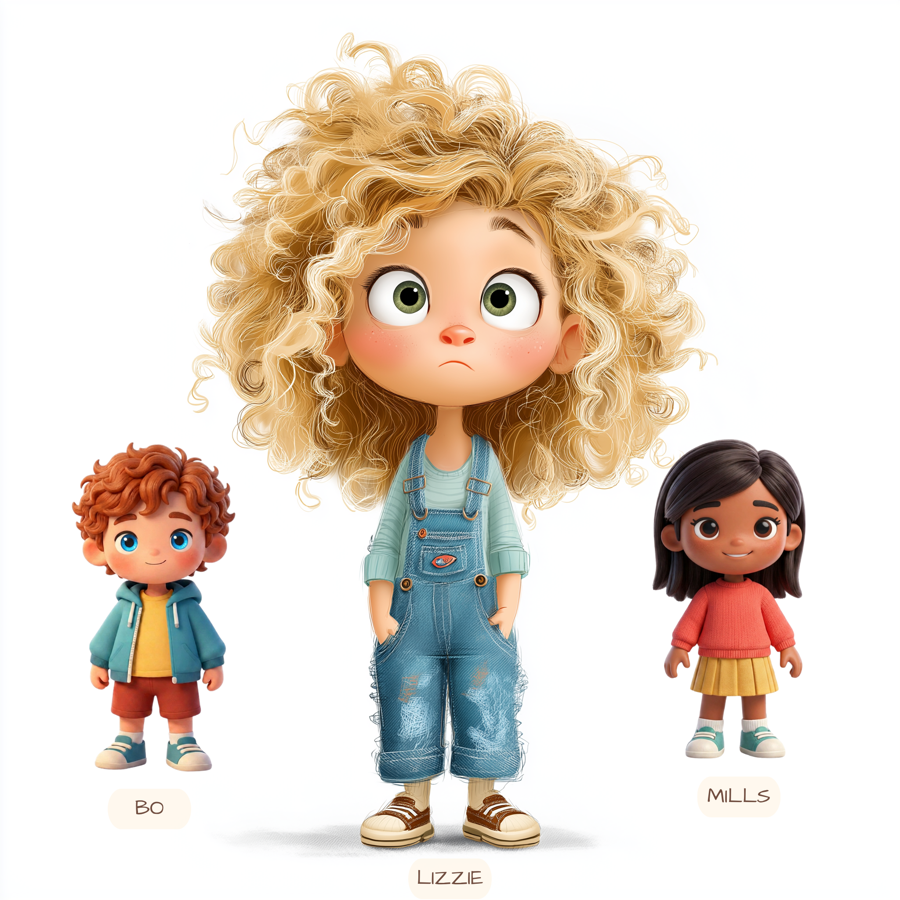
Different childhoods, different homes, different perspectives, and experiences. Learn about how environments impact child development and overall well-being by following along with Lizzie, Mills, & Bo.
Emotional orphans aren't children without parents. They're children whose emotional world went unseen — even in families that looked perfectly fine from the outside.
This space exists because healing happened — and because the woman who lived it believes your story deserves to be seen, named, and met with compassion.
"What do you wish the world was more like?
Go give that to the world today."
— emotionalorphans.com
"My parents gave me everything I needed — a good house, good schools, they never yelled. So why does it feel like something was missing? I feel guilty even writing this."
Dear June answersYou're allowed to hold both of these at once: your parents did a real, measurable amount right, and you still grew up without something you needed. Emotional neglect isn't about what was taken from you — it's about what never arrived. Attention to your inner world. Curiosity about your feelings, not just your report card. A house can be safe and well-run and still be quiet in the one place a child needs noise: being truly known. The guilt you feel is common, and it's not a sign you're wrong. It's a sign you were taught that naming a need is the same as making an accusation. It isn't.
"I'm a parent now, and I catch myself repeating patterns I swore I'd never repeat — rushing past my kid's tears, changing the subject when things get too emotional. How do I actually break this?"
Dear June answersCatching it is the work. Most people who grew up unseen don't notice the pattern at all — they just live inside it. The moment you feel yourself rushing past the tears is the moment you have a choice you never used to have. You don't need to be a different person than the one your parents raised. You need about four extra seconds: pause, get curious instead of efficient, ask one more question before you move on. Repair matters more than perfection — if you catch yourself an hour later, you can still go back and say "I brushed past that. Tell me more." Your kid will remember that you came back.
"I honestly don't know what I feel most of the time. People ask and I just say 'fine' because I genuinely can't find a better word. Is that normal?"
Dear June answersIt's extremely common in people who grew up in homes where feelings weren't tracked or responded to. When nobody asks a child what's underneath the surface, that child stops checking. It's not that the feelings disappeared — it's that the muscle for noticing them never got built. The good news is that muscle can still grow, at any age. Start absurdly small: a few times a day, pause and name one word — not "fine," a real one. Tired, tight, flat, restless. You're not looking for the right answer. You're just practicing the noticing. That's the whole skill.
Defined by what was missing — attunement, validation, curiosity about your inner world — not by what happened to you.
Parents who were themselves emotionally neglected often don't have the tools. They gave what they had. Intent does not erase impact.
You can have everything on the outside and still be emotionally starving. The unseen things matter most.
Because nothing "happened," many survivors spend years invalidating their own pain — wondering why they feel the way they do.
When feelings weren't named or acknowledged in childhood, adults often struggle to recognize what they're feeling — or feel numb altogether.
Children who weren't responded to emotionally learn that their inner experience is unimportant — a belief that follows them into adulthood.
"Others have it worse." A critical inner voice that dismisses your pain is a direct echo of emotional invalidation in childhood.
Learning to smile, to be easy, to not take up too much space — and having no idea how to stop when you're finally safe to feel.
A vague, persistent sense of emptiness — even when life looks fine from the outside — is one of the most common hallmarks of CEN.
Because "nothing bad happened," survivors often feel they have no right to feel hurt — which only compounds the original wound.
The foundational book on childhood emotional neglect. Widely credited with giving people language for what they experienced.
Find the book →Quizzes, articles, and therapist resources from the clinician who brought CEN into public awareness. Includes a free CEN questionnaire.
Visit the site →A large, active community of people sharing their experiences and supporting one another. You are not alone in this.
Visit the community →Look for therapists experienced in attachment, developmental trauma, or family of origin work. Psychology Today lets you filter by specialty.
Find a therapist →There's no person in the whole world like you, and I like you just the way you are.
— Fred RogersI don't think anyone can grow unless he's loved exactly as he is now, appreciated for what he is rather than what he will be.
— Fred Rogers, on loveKnowing that we can be loved exactly as we are gives us all the best opportunity for growing into the healthiest of people.
— Fred Rogers, on self-acceptanceAnything that's human is mentionable, and anything that is mentionable can be more manageable. When we can talk about our feelings, they become less overwhelming, less upsetting, and less scary. The people we trust with that important talk can help us know that we are not alone.
— Fred RogersFor a generation of children whose homes were emotionally quiet, Mister Rogers was sometimes the only adult voice that said: you matter, exactly as you are. That message is still missing for too many children — and too many adults who needed to hear it then and never did. This site exists to say it again.
Your feelings were always allowed. This is a place to finally say what was never safe to say — and to know you are not alone in it.
Different childhoods, different homes, different perspectives, and experiences. Learn about how environments impact child development and overall well-being by following along with Lizzie, Mills, & Bo.